Dry Needling, Defined
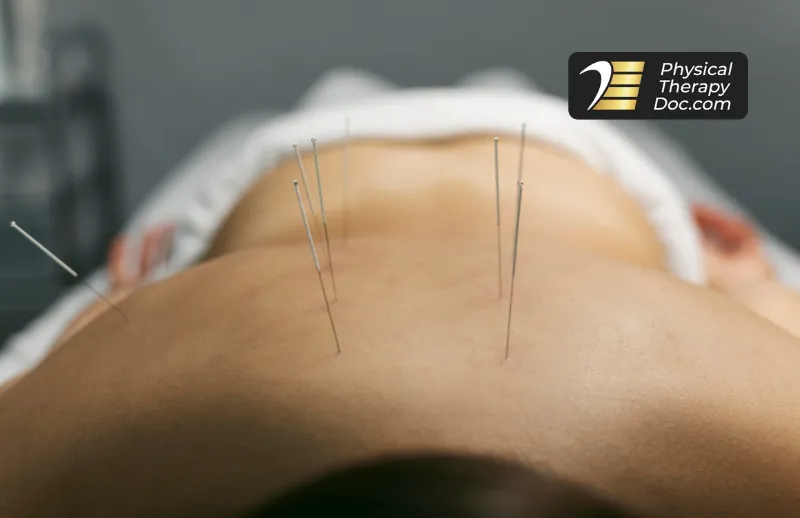
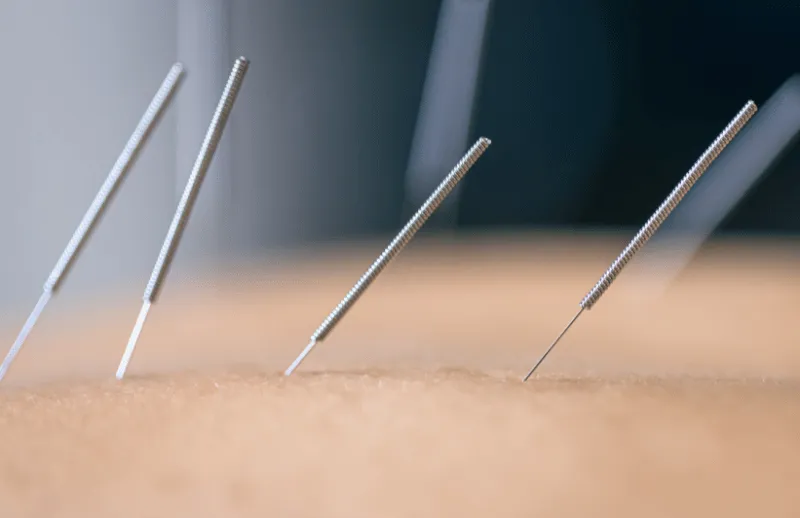
Dry needling uses a thin, sterile needle, about the width of a hair, placed directly into a tight band inside the muscle called a trigger point. That is the small, cranky knot that stays contracted, refers pain to other spots, and quietly limits how well the muscle works.
“Dry” just means the needle carries no medication. It is not an injection and it is not acupuncture. It is a tool a physical therapist uses to change the muscle itself instead of working around it.
At Physical Therapy Doc, Dr. Vlad Madorsky is the treating clinician who performs dry needling.
How It Works, in Plain Terms
The needle reaches the trigger point and the muscle twitches and lets go.
Fresh circulation and oxygen flood the spot and stay raised afterward.
Your body releases its own painkillers and quiets the signals that kept it sore.
When the needle hits the trigger point, the muscle usually gives a quick, involuntary twitch. That twitch is the knot releasing its grip. Right behind it, blood flow and oxygen to the spot climb and stay elevated for at least 15 minutes, which is just what a starved, overworked muscle needs.
At the same time your body dials up its own natural painkillers and turns down the chemistry that keeps the area sore and sensitive. The knot loosens, the muscle can lengthen, and you can finally move it the way it was built to move.
That window is the point. It is not magic and it is not permanent on its own. It is an opening, and what you do inside that window is what makes the change last.
Common Assumption
The muscle doesn't hurt anymore, so it's probably fine.
What the Research Shows
A muscle can stop hurting but still be dysfunctional. Dry needling helps get rid of trigger points and restore function.
What Dry Needling Treats Best
Strong evidence
This is not one hopeful study. Dozens of trials, taken together, show the same thing: when the pain is coming from a knotted muscle, needling produces large drops in that pain, and the relief shows up fast, within days, and holds for months.
A few conditions stand out:
- Tennis elbow. The trials show more than pain relief: grip strength comes back, which is the difference between babying your backhand and hitting through the ball again.
- Plantar fasciitis. That 8-in-10 result above is not a fluke: across a dozen further studies, adding needling kept beating standard care alone.
- Knee and kneecap pain. Across trials involving well over a thousand people, pain dropped and function came back, and in female athletes with kneecap pain, adding needling to exercise beat exercise alone.
You will notice the theme: needling plus exercise, not needling alone. That is the honest version of how this works.
Neck, Shoulder, and Low Back Pain
The conditions above carry the flashiest trial numbers, but the place dry needling gets used most, in research and in clinics alike, is the neck, the shoulder, and the low back.
- Low back. The trial charted further down this page is the strongest single result here: chronic low back pain went from about a 7 out of 10 to about a 1 when needling was added to exercise. It was still a 1 three months later.
- Neck. Across the trials, needling took pain down about 2 points on a 10-point scale within weeks, a 6 becoming a 4, with day-to-day function improving alongside it.
- Shoulder. The pain relief here is modest, but what the shoulder can do improves a lot, and for a serve or an overhead press, that is the number that matters.
Two honest notes. Needling is not better than good hands-on physical therapy for these problems. Its value shows up when it is added to one, which is the only way it is used here: one tool inside a session that already includes manual therapy and strength work.
And fit matters. When pressing a trigger point reproduces the pain you already know, that is a good sign the muscle is driving your problem. When nothing does, needling is probably not your tool, and finding that out early is half the point of the evaluation.
Inside a Session
Needle, Release, Load.
There is a sequence to it, and it is deliberate:
- Find the real driver. Dr. Vlad tracks down the muscle that is actually causing your problem, which is often not where you feel the pain.
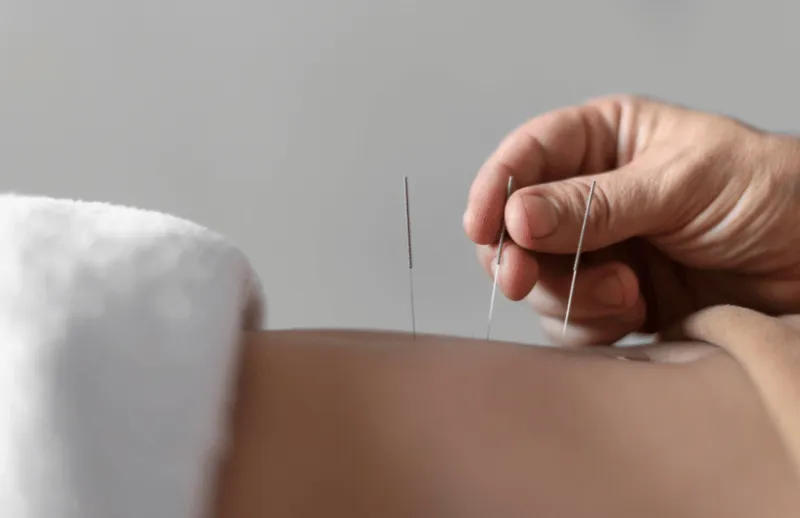
- Needle the trigger point and get the release.
- Mobilize it. Hands-on manual therapy works the freshly loosened tissue.
- Load it. You move straight into corrective exercise while the muscle is open and responsive. For some people he adds blood flow restriction training to build strength without heavy load.
In his own practice, the fastest wins have come from tennis players with tennis elbow, stubborn low back and hip pain, plantar fasciitis, Achilles pain, and releasing the quads to settle down cranky knees.
Plenty of people feel a clear difference after one visit. The full change usually takes three to six sessions, about one a week, with the exercises doing the work in between.
Can You Train After Dry Needling?
Usually yes, and light work may even help.
The standard advice you will read elsewhere is to rest for 24 hours. There is essentially no research behind that rule, and the best available data point the other way.
In a shoulder trial, people who did one round of light, low-load exercise right after needling were less sore at both 24 and 48 hours than people who rested. Across the trials that have tested it, moving after needling has been at least as good as resting and never worse.
Here is what the soreness itself does:
- It feels like a hard workout in the treated muscle, not an injury
- It peaks in the first half day, with the steepest drop between hours 6 and 12
- It is mostly gone within one to two days
One honest limit: nothing in the research says needling makes your next workout better. What the evidence gives you is permission to keep training, not a performance boost.
And because soreness scales with how much needling work a muscle gets, the dose of a session can be planned around your week. Tell Dr. Vlad when your next match or heavy session lands.
How Long Dry Needling Results Last
Relief from a single session typically lasts days on its own. Paired with the right strengthening work, research shows the gains holding at three and even six months. That is the real answer: one session buys you a window, not a cure, and the lasting change comes from what fills that window.
Watch that play out in a real trial. Researchers took 40 people with chronic low back pain. Half got dry needling plus exercise. Half got a placebo plus exercise. Same program, different needle:
Figure 1
The same pattern shows up across conditions. Across those same dozens of trials, the gains held at three and even six months.
The tennis elbow trial that built needling into a full rehab program still showed a large advantage at three months. In every case, the results that lasted came from needling and exercise together, and that is what Dr. Vlad will recommend for you too.
Is Dry Needling Right for You?
Dry needling is a strong fit when a tight, overworked muscle is the thing driving your pain. It is not a standalone cure, and Dr. Vlad will not sell it to you as one.
Its job is to open a window of relief and better movement so the real work of sports rehab, the loading and strengthening that keeps the problem from coming back, actually takes.
If your problem is not muscle-driven, he will say so and point you at what will help instead. One common fork: when the pain lives in the tendon itself, degenerated tissue rather than a tight muscle pulling on it, shockwave therapy is often the stronger tool, and some stubborn cases call for both.
That is the whole model here: figure out the root cause first, then use the right tool for it.
Who Should Not Get Dry Needling
Dry needling by a trained physical therapist is very safe. Across more than 13 million recorded sessions, anything worse than a bruise was vanishingly rare, a few cases per 100,000, and even the strictest recent count of every complication researchers could find kept serious ones under half a percent.
The side effects you can actually expect are the mild kind:
- Soreness that feels like a hard workout, peaking in the first half day and settling within one to three days
- A small bruise or a drop of blood at the needle site
- Feeling a little sleepy afterward, occasionally
A few situations call for a different plan, and Dr. Vlad screens for every one of them before a needle comes out. Tell him if you:
- Take blood thinners
- Have a bleeding disorder
- Are pregnant
- Have a weakened immune system
- Have a strong fear of needles or a history of fainting around them
- Have a skin infection near the area that needs work
Most of these do not rule needling out. They change how he approaches it, or they mean a quick conversation with your prescribing doctor first. And if needling is simply not the right tool for your problem, he will use one of the other ways to release a muscle instead.
Dry Needling in West Boca Raton
Physical Therapy Doc is inside the Costa Performance gym in West Boca Raton. Dr. Vlad works one-on-one with athletes and active adults from the tennis, pickleball, golf, running, and CrossFit communities across West Boca.
In Florida you do not need a physician referral to see a physical therapist. A tight muscle does not loosen by being worked around, and your season is not waiting. If it keeps getting in the way of your sport, book a free call and get a straight answer.
Who you work with
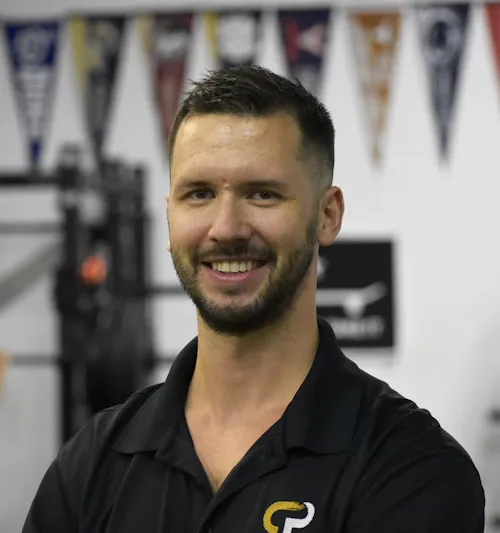
Every session is one-on-one with Dr. Vlad
Physical Therapy Doc is a one-clinician practice. Every evaluation, treatment, and training session is done by Dr. Vlad himself.
- DPT and CSCS. A doctor of physical therapy and a certified strength coach in one, so the person treating the injury is also qualified to load you back to full performance. Fewer than 4% of physical therapists hold both credentials.
- One-on-one, every session. The same clinician who assessed you treats you, start to finish. No aides, no handoffs.
- Inside Costa Performance. A performance training gym in West Boca Raton, with everything needed to go from the treatment table back to full training.
★★★★★
“Hey, I'm a pro tennis player and Vlad is an incredible physio. He works with a lot of detail and gets the job done.”
Where to find us
Serving West Boca Raton and surrounding communities
Physical Therapy Doc is located inside Costa Performance gym at 10018 Spanish Isles Blvd, Suite A52, between Clint Moore and Yamato, just off US-441.
Athletes and active adults come to us from St. Andrews, Broken Sound, Seven Bridges, and the tennis, golf, and pickleball communities across West Boca, Delray Beach, and Boynton Beach. They come for one-on-one care the standard clinic model does not offer.
Frequently asked questions
Does dry needling hurt?
The needle itself is thin and most people barely feel it go in. What you do feel is the muscle. When the needle reaches a tight knot, the muscle often gives a quick twitch and a deep, cramp-like ache that lasts a few seconds and then eases. Afterward you may feel sore, a lot like the day after a hard workout. That soreness peaks in the first half day and eases within one to three days.
Dr. Vlad talks you through every muscle before he treats it, so nothing catches you off guard.
How much does dry needling cost, and do you take insurance?
Physical Therapy Doc is a self-pay practice, so there is no insurance billing and no surprise bill six weeks later. Dry needling is part of your one-on-one session, not an add-on fee, and FSA and HSA cards are accepted.
The trade-off is real: you pay out of pocket, and in exchange the entire visit is Dr. Vlad, hands on, doing the needling, the manual work, and the exercise in the same hour. Insurance clinics have to treat what your plan approves in the time your plan allows. Here the plan is built around what gets you back to your sport.
On the free call Dr. Vlad will tell you what your plan would involve and the exact cost, and in Florida you do not need a referral to start.
Can I work out after dry needling?
Usually yes. The common advice to rest for 24 hours has essentially no research behind it. In a shoulder trial, people who did light exercise right after needling were less sore over the next two days than people who rested.
Expect the treated muscle to feel like it did a hard workout: soreness peaks in the first half day and is mostly gone within one to two days. If you have a match or a heavy training day coming up, tell Dr. Vlad, because how much needling a muscle gets in a session can be planned around your week.
How many dry needling sessions will I need?
Many people feel real relief after the very first session. Lasting change usually takes about 3 to 6 sessions, roughly one a week, alongside the exercises that keep the muscle from tightening back up. If you are not noticing a difference within the first few visits, that is useful information too, and Dr. Vlad will adjust the plan rather than keep repeating something that is not working for you.
How long do the needles stay in?
Not long. In trigger point protocols the needle moves gently in and out of the knot for a few seconds up to a couple of minutes per muscle, then comes out. It is not parked in place while you wait; the research says the active in-and-out approach is what actually works.
Across every muscle treated, the needling portion of a visit usually runs under 15 minutes, and the rest of your session goes to the hands-on work and exercise that make the release last.
How long do the benefits of dry needling last?
That depends almost entirely on what you do with the window it opens. A session on its own gives you days of relief while the muscle is loose. When the needling is paired with the right strengthening work, research shows the gains holding at three and even six months. That is why Dr. Vlad builds the exercise piece into dry needling visits whenever he can. The needle buys the opportunity, and the loading is what makes it permanent.
Is dry needling the same as acupuncture?
No. They only look alike because both use thin needles. Acupuncture comes from traditional Chinese medicine and treats points along energy meridians. Dry needling is based on muscle and nerve anatomy. Dr. Vlad, a doctor of physical therapy, targets specific trigger points, the tight bands inside a muscle that refer pain and limit how you move, to calm them down and restore normal function.
What conditions does dry needling treat?
It works best on pain that traces back to tight, overworked muscles and the trigger points inside them. The strongest research is in muscle-driven pain, tennis elbow, kneecap and knee pain, and plantar fasciitis. In the clinic Dr. Vlad also gets fast results releasing quads, hamstrings, calves, glutes, forearms, the low back, and the neck. If your problem is a tight muscle driving the pain, it is likely a fit. If it is not, he will tell you.
Is dry needling worth it for athletes?
For the right problem, yes. A tight muscle that keeps cutting your serve short, shortening your stride, or flaring your elbow responds well to having that trigger point released and then loaded properly. The key word is properly.
Dry needling opens a window of relief and better movement, and the exercise that follows is what makes it stick. On its own it is a short-term fix. Built into a real plan, it helps you get back to your sport and stay there.
Not sure if this is the right fit?
Book a free phone consultation with Dr. Vlad. Tell him what is going on, and he will tell you honestly whether he can help and what that would involve.
Book a Free Phone ConsultationFree 15 min call with Dr. Vlad Madorsky, PT, DPT, CSCS