Maybe you swung a golf club and your back seized up. Maybe you just bent down to pick something up. Now you are standing crooked, moving in slow, careful steps, and wondering how something this common can hurt so much.
Start with the good news: a thrown-out back is almost always a muscle and joint problem, not permanent damage to your spine, and it treats well. What you do during the episode, and what you do after it, decides whether it comes back.
What Happens When You Throw Your Back Out
The dramatic seizing feeling is usually a strain of the muscles and joints of the lower back, followed by protective spasm: the surrounding muscles clamp down to guard the area. Spasm is why the pain feels so much bigger than the movement that triggered it, and why standing up straight suddenly feels impossible.
What it usually is not: a broken spine, a ruptured disc, or permanent damage. Doctors call this mechanical low back pain, meaning the pain comes from the muscles and joints of the back and changes with movement and position, rather than coming from a disease or a badly compressed nerve. A back in full spasm can be agonizing and still be a completely mechanical, fixable problem.
Typical signs of mechanical back pain: pain across the lower back that may spread into the buttock, stiffness that is worst after sitting or first thing in the morning, and certain movements that set it off while others feel almost fine. A disc can also be involved; if a disc is the main problem, that is covered on the herniated disc page.
First, Rule Out the Serious Causes
A small fraction of back pain needs a physician promptly. Get urgent medical care, not a PT appointment, if your back pain comes with any of these:
- New trouble controlling your bladder or bowels, or numbness in the groin or inner thighs
- Leg weakness that is progressing, or a foot that has started dropping or dragging
- Fever or chills alongside the back pain
- Unexplained weight loss, a history of cancer, or pain that is constant at night regardless of position
- A real trauma behind it, like a fall or a car accident, especially past age 50
If none of those apply, the odds are overwhelmingly on your side: this is the mechanical kind, and everything below applies to you. One more sorting note: if your pain shoots below the knee, or you have numbness or tingling in the leg, that points to sciatica, which has its own page.
The First 72 Hours: Move, Use Heat, Skip the Bed Rest
The research on the first week is clear, and some of it is the opposite of the usual advice.
Keep moving. Staying active beats bed rest, and it is not close. Bed rest beyond a day or two slows recovery, stiffens everything around the spasm, and teaches your back to fear movement. Walk as much as comfort allows, change positions often, and live your life at reduced intensity.
Use heat. This one surprises people. In the American College of Physicians treatment guideline, heat is the self-care option with the best trial support for a fresh episode; ice does not make the list. About 20 minutes at a time, several times a day.
That said, Dr. Vlad has worked with plenty of people who swear by ice, and it genuinely helps them feel better. Neither one will make or break your recovery; they are helpers, not treatment. If you love the ice, use the ice. It will not hurt your healing.
Common Assumption
Ice it for the first two days, then switch to heat.
What the Research Shows
Heat is the option with real trial support for a fresh back episode: it reduced pain within days in the trials that tested it. Ice still feels good for many people and does no harm; the ice-first rule is just tradition, not evidence.
Know what the pills can and cannot do. Tylenol-type pain relievers tested no better than a placebo for acute low back pain. Anti-inflammatories like ibuprofen help modestly and are the reasonable short-term choice if your physician has no objection. Neither one fixes anything; they just make the wait more comfortable.
Do You Need an MRI for Acute Low Back Pain?
Almost never in the first six weeks, and not just because scans cost money. Scans of adults past 40 show disc bulges, degeneration, and arthritis in a large share of people who have no back pain at all. Order an MRI during a routine episode and it will usually find something, and that finding usually has nothing to do with your pain.
If part of you wants the scan just to hear it is nothing serious, that is the most common reason people ask. The warning signs earlier on this page are the better answer: no bladder or bowel changes, no progressing leg weakness, no fever, no unexplained weight loss means the serious causes are already close to ruled out. Early scans for uncomplicated back pain lead to more injections and more surgery without better recoveries, which is why physicians everywhere are now told to hold off on them.
Imaging earns its place when a warning sign is present, when nerve symptoms are progressing, or when an episode refuses to follow the expected timeline. The right first step is a hands-on evaluation: where the pain is, which movements provoke it and which relieve it, and whether anything points beyond a muscle and joint problem.
How Long Acute Low Back Pain Lasts
Put those numbers together and the picture is clear. Most single episodes settle. But unless something about your back changes, the pain usually returns, and every repeat episode raises the odds that it sticks around for good.
So the real question about your thrown-out back is not “how fast will this one pass?” It usually passes. The question is what you are going to change so the next one does not come.
Physical Therapy for Acute Low Back Pain, and Why Sooner Is Better
The earlier a back episode gets evaluated, the better things tend to go, and the first step is a phone call, not a visit. You can make it today, even while your back is still in spasm.
Early care mostly protects you from the things that go wrong around a back episode. In a study that followed 32,070 people with new back pain, those who started physical therapy within two weeks went on to far fewer MRIs, injections, and surgeries, and used fewer opioids. A second study, published in 2022 and tracking nearly one million adults with new back pain, found the same pattern. If your plan was to give it a few more weeks and see, know that waiting is how many people end up with scans and injections they never needed.
And for the recurrence problem, the evidence is stronger still: exercise programs with education cut the risk of the next episode by close to half. That is the difference between treating this episode and stopping the next one before it starts.
Who should not wait to be seen: anyone whose pain travels below the knee or comes with weakness, anyone not clearly improving within two to four weeks, and anyone on their second or third episode. Athletes who need their return to lifting or sport managed rather than guessed belong on that list too.
Chiropractor or Physical Therapist for Back Pain?
In Boca Raton, the first stop for a thrown-out back is often a chiropractor, so here is a fair comparison.
Spinal adjustments genuinely help in the short term. Across 15 trials, manipulation took the edge off early pain: enough to notice, not enough to change what your back can do yet. In the first week or two, adjustments and exercise-based care relieve pain about equally. Neither one has a big edge early on.
The difference shows up over the year. A 1,000-person trial answered this directly. People who only got adjustments were just as likely to end up with chronic pain as people who got standard medical care. People who did active, exercise-based care cut their odds of chronic pain from 54 percent to 34 percent: from about half still dealing with it a year later, down to one in three.
Table 1
Adjustments alone
Active rehab
Real short-term relief
About the same short-term relief
Odds of chronic pain: unchanged
Odds of chronic pain: cut from 54 to 34 percent
Done when the pain quiets
Done when the back is rebuilt
That is not a verdict on any practitioner’s skill. It is the design of the care: a treatment aimed at relieving the episode does not rebuild the back underneath it, and the rebuild is what moves the one-year numbers. Plenty of people sensibly use both: relief where it helps, exercise-based work to keep the next episode from coming.
Training With a Cranky Back
For the lifters, golfers, and tennis and pickleball players: an episode is a load-management problem, not a ban from the gym. Complete rest costs you strength, and a weaker back is easier to hurt again. The fear that builds during a layoff is itself one of the best-documented predictors of a slow return.
What you can usually keep doing during an episode:
- Walking and easy cardio, as much as comfort allows
- Upper-body and single-leg work that does not provoke the back
- The movements that feel fine, at reduced load. Most backs have a direction they tolerate well even mid-episode
- Light, pain-free core work after the first 2 to 3 days
What gets paused, temporarily: heavy end-range lifts that flex or twist the loaded spine, the max-effort deadlifts, heavy bent-over rows, and loaded rotation. They come back in stages as the back proves ready.
For progressing back up, clinicians use a simple rule of thumb: a mild flare that settles by the next day means the dose was acceptable. A flare that escalates or lingers means back off one step, and add load or range, not both at once.
The golfer’s version of the question, “when can I swing again,” has no trial-issued date, so it gets staged instead. Putting and the short game usually come back first, half swings return as rotation stops provoking, and the full driver comes last, each step passing the next-day test before the next one loads.
Expect to return to training while some symptoms are still present, because waiting for a perfect zero is how weeks become months. Pain with movement is information to manage, not proof of damage.
How Dr. Vlad Treats a Back Pain Episode
Low back pain is the most common problem that walks through Physical Therapy Doc’s door, and fresh episodes are the cases that respond fastest. Every visit is a private hour, one-on-one with Dr. Vlad.
Early on, the work is weighted toward calming things down:
- Hands-on treatment through the muscles in spasm: manual therapy, with tools like dry needling and TECAR therapy where they fit the case
- Exercise from day one, starting light and building as your back allows
- Finding the movements that help. Most backs in spasm have directions of movement that calm them down and directions that set them off. Dr. Vlad identifies yours and uses them to speed up the recovery
- No deep stretching yet. That waits until the back is ready for it
As the pain settles, the focus shifts to rebuilding through corrective exercise: trunk stabilization that starts with the deepest muscle layers and works outward, then progressively restores your hinge, your rotation, and your loaded lifts.
That rebuild is the part that addresses the recurrence problem instead of leaving it to luck. For backs that keep repeating, it is what our back pain stabilization program exists for, and injury prevention work afterward keeps the problem from coming back.
Acute Low Back Pain Care in West Boca Raton
Physical Therapy Doc sits inside Costa Performance gym in West Boca Raton, where Dr. Vlad works with the local golf, tennis, and pickleball crowd and the lifters, one-on-one from evaluation through return to full training.
One pattern from his caseload is worth knowing. A fresh episode is usually quick to treat. A back that has been ignored for years is not: in his experience, a long-neglected, degenerated back takes at least three to six months of steady work to change, sometimes closer to a year. If your back has already been acting up for a while, do not assume the worst; most are nowhere near that. But catching the problem early is how you avoid ever finding out what the long version is like.
The same problem, caught now, is a far smaller one. Book the free 15-minute call, tell Dr. Vlad how it happened, and get an honest read on what fixing it takes while it is still the easy version.
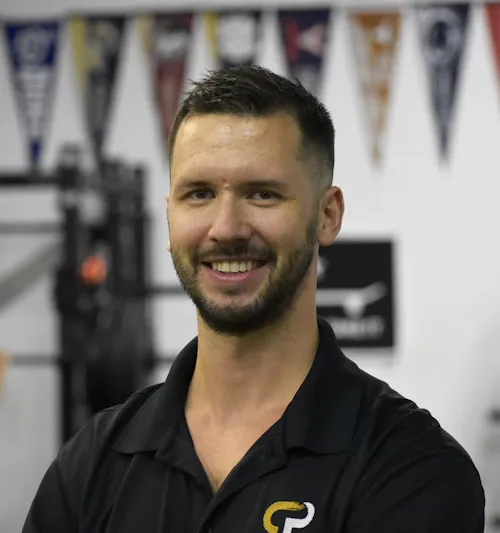
Who you work with
Every session is one-on-one with Dr. Vlad
Physical Therapy Doc is a one-clinician practice. Every evaluation, treatment, and training session is done by Dr. Vlad himself.
- DPT and CSCS. A doctor of physical therapy and a certified strength coach in one, so the person treating the injury is also qualified to load you back to full performance. Fewer than 4% of physical therapists hold both credentials.
- One-on-one, every session. The same clinician who assessed you treats you, start to finish. No aides, no handoffs.
- Inside Costa Performance. A performance training gym in West Boca Raton, with everything needed to go from the treatment table back to full training.
Where to find us
Serving West Boca Raton and surrounding communities
Physical Therapy Doc is located inside Costa Performance gym at 10018 Spanish Isles Blvd, Suite A52, between Clint Moore and Yamato, just off US-441.
Athletes and active adults come to us from St. Andrews, Broken Sound, Seven Bridges, and the tennis, golf, and pickleball communities across West Boca, Delray Beach, and Boynton Beach. They come for one-on-one care the standard clinic model does not offer.
Frequently asked questions
How long does a thrown-out back take to heal?
For most people, the worst is over within days and the episode has mostly settled within a few weeks. In the research, most people's pain drops by more than half within six weeks.
The part that surprises people is what happens after. At least 1 in 3 backs that recover have another episode within a year, because the pain stopping does not mean the back is fixed; the weakness that let it happen is usually still there. Closing that gap is where physical therapy earns its place.
How much does treatment cost, and do you take insurance?
Physical Therapy Doc is a self-pay practice. There is no insurance billing and no visit cap deciding when your back is done, and FSA and HSA funds work here.
Each visit is a full one-on-one hour with Dr. Vlad, and the plan depends on your back and your goals, so the numbers are specific to you.
The free phone call is the place to start: tell Dr. Vlad what is going on, and if it makes sense to move forward, the next step is an evaluation, whose exact cost you get on that call before committing to anything.
Should I rest in bed or keep moving?
Keep moving. This is one of the clearest answers in all of back pain research: people who stay active recover better than people who rest in bed, and bed rest beyond a day or two actively works against you.
Moving does not mean pushing through a workout. It means walking, changing positions often, and doing normal daily activities as comfortably as you can while the episode settles.
Is it sciatica or a pulled muscle?
The quickest clue is where the pain goes. A strained back hurts in the back, sometimes spreading into the buttock or upper thigh.
Pain that travels below the knee, or comes with numbness, tingling, or leg weakness, points to an irritated nerve, which is a different problem with its own page: see sciatica. Either way it deserves an evaluation, but nerve symptoms move it up the priority list.
How should I sleep with acute low back pain?
Two positions work for most people: on your back with a pillow under your knees, or on your side with a pillow between your knees. Both take strain off the lower back.
Beyond position, avoid staying in any one posture too long, day or night. Backs in spasm like gentle, frequent position changes more than perfect stillness.
Can I keep lifting weights with lower back pain?
Usually yes, with the weights and exercise selection adjusted. Training through an episode mostly means pausing heavy lifts that bend or twist a loaded spine, keeping the movements that feel fine at reduced weight, and building back up step by step as the back settles.
Complete rest tends to backfire: you lose strength, and a weaker back is easier to hurt again.
Do I need a referral to see a physical therapist in Florida?
No. Florida allows direct access to physical therapy, so you can book an evaluation without seeing a physician first.
If your exam turns up anything that needs a physician, Dr. Vlad will tell you and point you to the right one. He works alongside doctors, not around them.
Not sure if this is the right fit?
Book a free phone consultation with Dr. Vlad. Tell him what is going on, and he will tell you honestly whether he can help and what that would involve.
Book a Free Phone ConsultationFree 15 min call with Dr. Vlad Madorsky, PT, DPT, CSCS