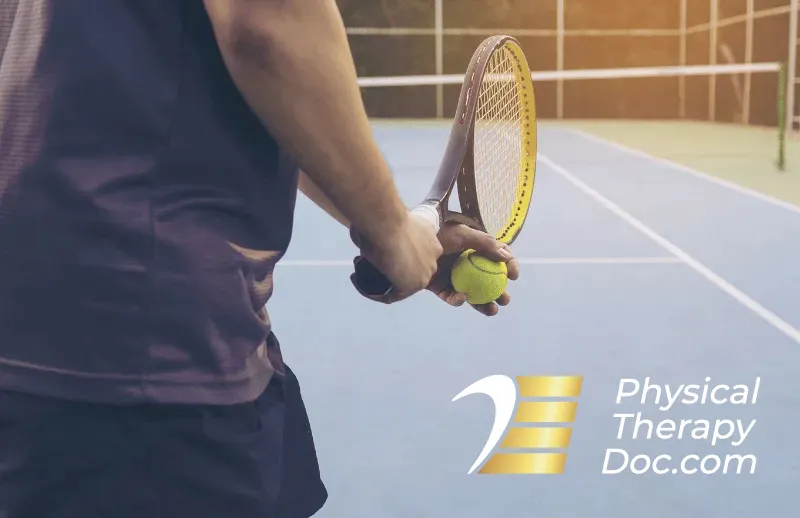
The outside of your elbow burns when you grip the racquet. Your backhand hurts, opening a jar is a negotiation, and the rest you were promised would fix it has not.
That is tennis elbow. If you are reading this after months of it, here is the short version of everything below: the tendon does not need more rest, it needs to go into repair mode. And you can usually keep playing while that repair happens.
Tennis Elbow Is a Tendon Problem, Not an Inflammation Problem
Tennis elbow, lateral epicondylitis, lives in the tendon that anchors your wrist and finger extensor muscles to the bony bump on the outside of the elbow. Under a microscope, that tissue is not inflamed. It is degenerated: disorganized collagen with poor blood supply, worn down faster than it has rebuilt.
That one fact explains most of what frustrates people about this condition. Ice and anti-inflammatories quiet the pain without touching the problem, because there is no inflammation to fight. Rest feels sensible and fails, because an unloaded tendon does not remodel.
Common Assumption
The tendon is inflamed, so I should rest it, ice it, and wait for it to calm down.
What the Research Shows
The tissue is degenerated, not inflamed. Controlled, progressive loading is what signals a tendon to rebuild, which is why the treatments that hold up in trials all involve work, not rest.
What a worn tendon responds to is mechanical tension in the right dose. Loading tells the tissue to lay down new collagen and organize it, the same way training tells a muscle to grow.
Who Gets Tennis Elbow (Pickleball Counts)
Despite the name, only a small fraction of people with tennis elbow got it from tennis. The tendon does not care what the gripping and wrist work came from:
- Racquet sports. Tennis, and increasingly pickleball, which is causing more and more cases in players 40 and up. Same tendon, same mechanism.
- Lifting. Heavy gripping under load, pull-ups, rows, and deadlifts all feed the wrist extensors.
- Golf. The lead elbow takes load on its outer side through the swing, so golfers get tennis elbow as well as golfer's elbow.
- Work and life. Tools, keyboards and mice, hours of forearm rotation. Plenty of cases have nothing to do with sport at all.
Most cases show up between 30 and 60, when tendons recover more slowly from the same workload they used to handle easily. That is not a reason to accept it. It means the workload needs managing, and workload can be managed.
Symptoms: How Tennis Elbow Shows Up
The signature is pain or burning at the outside bump of the elbow, brought on by gripping. The usual offenders:
- Shaking hands or gripping anything firmly
- Lifting a coffee cup with a straight wrist
- Turning a stubborn door handle or a jar lid
- The backhand, most of all
Grip strength itself often drops, sometimes before the pain gets loud.
A quick way to tell it apart from its sibling: with your palm up, tennis elbow hurts at the outside bump, golfer’s elbow at the inside one. Same family of tendon problem, different address, and the treatment logic is the same aimed at a different muscle group.
Night aching after a heavy day is common. Pain that is severe at rest, or that comes with numbness or tingling into the hand, deserves an evaluation sooner rather than later, because that pattern points away from a simple tendon story.
Getting It Diagnosed, Usually Without an MRI
Tennis elbow is diagnosed with hands and eyes: where the tenderness sits, which resisted movements reproduce your pain, how your grip tests against the other side. In one large series, X-rays changed the plan in under 1 percent of cases, and scans regularly show “abnormal” tendons in people with zero pain.
The real diagnostic skill is ruling out the impostors, because a stubborn “tennis elbow” that will not respond is sometimes not tennis elbow at all:
- Radial tunnel syndrome, a nerve compression whose tenderness sits lower down the forearm than the true tendon spot
- Pain referred from the neck, which can land in the outer elbow and forearm
- Joint problems inside the elbow itself, which restrict motion in ways a tendon problem does not
Part of every first evaluation here is checking for those. Treating the wrong diagnosis diligently is still treating the wrong diagnosis.
The Honest Recovery Timeline
Left completely alone, about 9 in 10 cases resolve within a year. Most clinics will not tell you that. Waiting genuinely works for most people. It is just slow, and it quietly costs you a season of play and a measure of grip strength that resting never rebuilds.
The same research shows the other side: roughly 1 in 10 is still hurting at a year, episodes can run to two, and heavy grip demands, like racquet sports, make it more likely you are in that group. One more finding worth holding onto: how long you have had it barely changes your odds of improving. A twelve-month elbow is not a doomed elbow.
With structured loading, the trials sketch a faster arc:
To be straight with you: the trials cannot promise that treatment gets the average person better faster than waiting. What treatment is built for is everything the waiting statistic ignores: the grip strength you get back, the relapse you avoid, and the sport you never had to leave.
Why Rest and Cortisone Keep Failing
The standard path, rest, ice, anti-inflammatories, a brace, then a cortisone shot, is built on the inflammation story the tissue research retired years ago. Each step quiets symptoms while the tendon sits unchanged, which is why the pain returns as soon as you get back to normal activity.
Cortisone deserves its own warning label. In the landmark trial that pitted the shot head-to-head against physiotherapy and against doing nothing, the injection group looked terrific at six weeks: 92 percent success. By one year they had collapsed to 69 percent, against 91 percent for physiotherapy, with more recurrences, and even the do-nothing group beat the shot.
Newer treatment guidelines have caught up with this data: the short-term relief is real, but the one-year outcomes are worse.
Common Assumption
The shot worked for a month, so it must have been fixing something.
What the Research Shows
Relief that fades is the documented pattern with cortisone. In the head-to-head trial it had the best six-week results and the worst one-year results, behind physiotherapy and even behind no treatment.
If you have already had the shot and the pain returned, nothing about that dooms you. In a tightly controlled trial of people whose elbows had resisted everything, twelve weeks of heavy, slow resistance training still produced large improvements. It was the cortisone add-on that dragged results back down by year’s end.
What Makes Recovery Succeed, and What Makes It Stall
Across the trials, one theme repeats: outcomes track the loading. Across 30 trials in over 2,100 people, exercise was the only approach that reliably rebuilt pain-free grip strength, which is the thing a racquet player needs most.
But “do exercises” is where most self-treatment dies, because the sheet of stretches is not the treatment. The treatment is dose: enough load to make the tendon adapt, progressed week over week, held just under the line that flares it. Too gentle and nothing changes. Too aggressive and you are back at day one.
From the clinic side, Dr. Vlad sees the same split the research describes.
The elbows that turn around belong to people who show up consistently, tolerate real hands-on work through the forearm, and treat next-day soreness as information instead of alarm.
The ones that stall are usually under-dosed: sporadic visits, skipped home work, and the same unmodified activities re-lighting the tendon between them. Not a character flaw, just a dose too low to change tissue, and the fix is a plan built to keep the dose honest.
Playing Through It: Yes, You Usually Can
Most people put off treatment because they assume playing will make it worse. The current evidence says otherwise: there is no evidence that using the arm despite pain damages the tendon. Rehab for tennis elbow is load management, not house arrest.
Managed play usually means small changes with outsized effects:
- Equipment. Grip size checked, string tension dropped a few pounds, a counterforce strap for sessions
- Volume. Trimming the drilling and repetitive forearm rotation before trimming the matches
- Technique. A backhand that leads with the trunk instead of the wrist unloads the tendon on every stroke
Return to full intensity is a measurement, not a feeling: grip strength back to matching the other side, sport-level hitting without a next-day flare, and function scores that have genuinely normalized. Grip symmetry is the most objective benchmark the research offers, and it can be measured in the clinic.
How Dr. Vlad Treats Tennis Elbow
Treatment here runs on the evidence above, delivered one-on-one for the full hour, every visit, in a self-pay practice where no insurance cap decides when you are done. The shape of a typical plan:
- Confirm it is actually tennis elbow. The exam covers the tendon, the forearm nerve paths, and the neck, so the plan targets the real driver.
- Free up the tissue. Hands-on work through the wrist extensors, from wrist to elbow, with manual therapy and, where they fit, tools like muscle scraping, cupping, or dry needling when tight forearm muscles are part of the picture.
- Load what got weak. Progressive strengthening for the wrist extensors and the muscles that rotate your forearm, through corrective exercise, dosed and advanced week by week.
- Fix the chain above it. Rotator cuff and shoulder stability work, because a weak shoulder sends extra load down to the elbow and keeps re-irritating it.
In his own practice, tennis players who kept practicing through care have typically turned the corner in four to six weeks of consistent weekly work.
His caseload with this condition spans teenage athletes to players in their 50s, and the best results have gone to the ones who committed to the between-visit work.
For elbows that need the full structured comeback, from pain relief through return-to-sport testing, that is what the tennis elbow program is built for.
Tennis Elbow Care in West Boca Raton
Physical Therapy Doc operates inside Costa Performance gym in West Boca Raton. Dr. Vlad treats local tennis, pickleball, and golf players one-on-one, from the first evaluation through return to sport.
One thing the research is clear on: waiting does not make this easier to fix. If tennis elbow keeps deciding when and how you play, book the free call and find out what it would take to get past it.
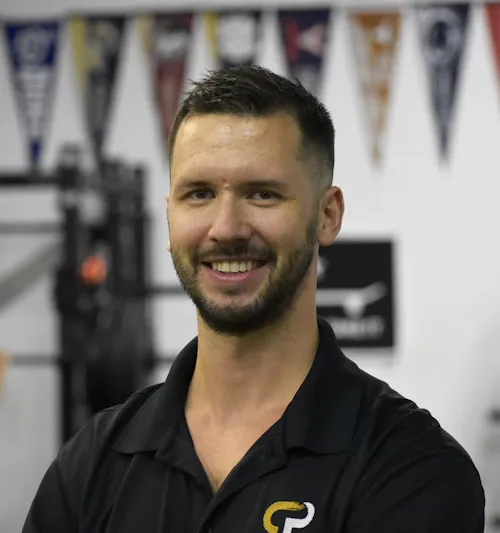
Who you work with
Every session is one-on-one with Dr. Vlad
Physical Therapy Doc is a one-clinician practice. Every evaluation, treatment, and training session is done by Dr. Vlad himself.
- DPT and CSCS. A doctor of physical therapy and a certified strength coach in one, so the person treating the injury is also qualified to load you back to full performance. Fewer than 4% of physical therapists hold both credentials.
- One-on-one, every session. The same clinician who assessed you treats you, start to finish. No aides, no handoffs.
- Inside Costa Performance. A performance training gym in West Boca Raton, with everything needed to go from the treatment table back to full training.
Where to find us
Serving West Boca Raton and surrounding communities
Physical Therapy Doc is located inside Costa Performance gym at 10018 Spanish Isles Blvd, Suite A52, between Clint Moore and Yamato, just off US-441.
Athletes and active adults come to us from St. Andrews, Broken Sound, Seven Bridges, and the tennis, golf, and pickleball communities across West Boca, Delray Beach, and Boynton Beach. They come for one-on-one care the standard clinic model does not offer.
Frequently asked questions
Will tennis elbow go away on its own?
Honestly: usually, eventually. Around 9 in 10 cases settle within a year without treatment. But that average hides two things. First, the timeline: a year of flare-ups is a long season to lose, and the elbow that finally stops hurting has usually also lost grip strength it never rebuilt.
Second, the tail: roughly 1 in 10 cases is still going at the one-year mark, and some run to two years, especially with high grip demands like racquet sports. If yours keeps coming back every time you play, you may be living in that tail, and waiting longer is not a plan.
How much does tennis elbow treatment cost, and do you take insurance?
Physical Therapy Doc works on a self-pay basis. No insurance billing, no visit caps deciding when you are done, and you can pay with FSA or HSA funds.
What that buys is different care: a full one-on-one hour with Dr. Vlad each visit, hands-on work plus a strength plan built around your sport. In his tennis elbow cases so far, that has typically meant about four to six weeks of consistent work.
The free phone call comes first: tell Dr. Vlad about your elbow, and if it makes sense to move ahead, the next step is an evaluation. You get its exact cost on that call, before committing to anything.
Should I get a cortisone shot for tennis elbow?
The research here is unusually clear. In the major trial that compared the shot directly with physiotherapy and with doing nothing, cortisone won the first six weeks and finished the year in last place: 69 percent success against 91 for physiotherapy.
Cortisone borrows relief from your future elbow, and repeat shots run the tendon further down. If you have already had one and the pain came back, that is the expected pattern, not a failure on your part, and loading treatment still works afterward.
Does a tennis elbow brace actually help?
A counterforce brace, the strap style, can genuinely take the edge off during activity. Worn about a thumb's width below the sore spot, snug but not tight, it changes where the tendon takes load so gripping hurts less.
The honest limit: a brace manages symptoms, it does not repair the tendon. Nothing about wearing one rebuilds the degenerated tissue or your grip strength. Use it as a tool that keeps you playing while the real work happens, not as the treatment.
What exercises fix tennis elbow?
Progressive loading of the wrist extensors is the approach with the strongest evidence: exercises that work the forearm under growing resistance, including lowering-focused (eccentric) work.
In one well-known trial, adding a simple rubber-bar eccentric exercise cut pain by 81 percent versus 22 percent with standard care alone.
The catch is dose. The difference between exercises that work and the sheet that failed you is load, progression, and consistency, pushing hard enough to change the tendon without flaring it, and adjusting week by week. That judgment is most of what you are paying a professional for.
What is the difference between tennis elbow and golfer's elbow?
Location. Tennis elbow is pain on the outside of the elbow, where the muscles that extend your wrist and fingers attach. Golfer's elbow is the same kind of tendon problem on the inside of the elbow, where the muscles that flex your wrist attach.
Quick self-check: palm up, outside bump hurting means tennis elbow, inside bump means golfer's elbow. Both show up in tennis, golf, pickleball, and lifting, and both respond to the same loading-first approach aimed at their own tendon group.
Why does my tennis elbow hurt at night?
Two common reasons. Sleeping positions that curl the wrist or press the elbow can keep the irritated tendon under stress for hours, and a day of gripping often catches up with the tendon once you finally stop moving.
Practical fixes: keep the wrist neutral at night, avoid sleeping directly on the affected arm, and mention night pain when you get evaluated. Pain at rest that is severe or comes with numbness is also one of the signs worth a professional look rather than more self-treatment.
Do I need an MRI or X-ray for tennis elbow?
Almost never to make the diagnosis. Tennis elbow is identified by examination: where it hurts, what movements set it off, how your grip tests. In one large series, X-rays changed the treatment plan in less than 1 percent of cases, and scans often show changes even in people with no pain at all.
Imaging earns its place when the picture does not fit, to rule out the look-alikes: a compressed nerve in the forearm, pain referred from the neck, or joint problems. Checking for those mimics is part of a proper evaluation.
Do I need surgery for tennis elbow?
Very unlikely. Only a few percent of people ever come to surgery, and the accepted bar is about a year of genuinely well-run active treatment that failed, not a year of resting and hoping.
Worth knowing before anyone offers it: in the one trial that tested surgery against a convincing fake operation, the real surgery did no better. That does not make surgery worthless in every case, but it puts properly dosed loading treatment firmly ahead of it in line.
Do I need a referral to get treated in Florida?
No referral needed. Florida gives you direct access to physical therapy, meaning you can book an evaluation without a physician visit first.
If you already have a doctor involved, that is welcome too: Dr. Vlad works alongside physicians, not against them, and can share findings and progress with your MD so everyone treating you is on the same page.
Not sure if this is the right fit?
Book a free phone consultation with Dr. Vlad. Tell him what is going on, and he will tell you honestly whether he can help and what that would involve.
Book a Free Phone ConsultationFree 15 min call with Dr. Vlad Madorsky, PT, DPT, CSCS