Cupping Therapy · West Boca Raton, FL
The Marks Are Not Bruises. Here Is What Cupping Actually Does to Your Muscles and When It Is Worth Using.
Every athlete knows the circles. What fewer people know is the specific mechanical effect behind them, why the research shows modest results in simple trials but stronger results when cupping is part of a complete session, and what that means for how Physical Therapy Doc uses it.

Randomized trials in the largest neck pain review — cupping reduced pain by 2.4 points on a 10-point scale vs. no treatment
Average pain score 24 hours after cupping in a DOMS trial, compared to 6.1 in the untreated group
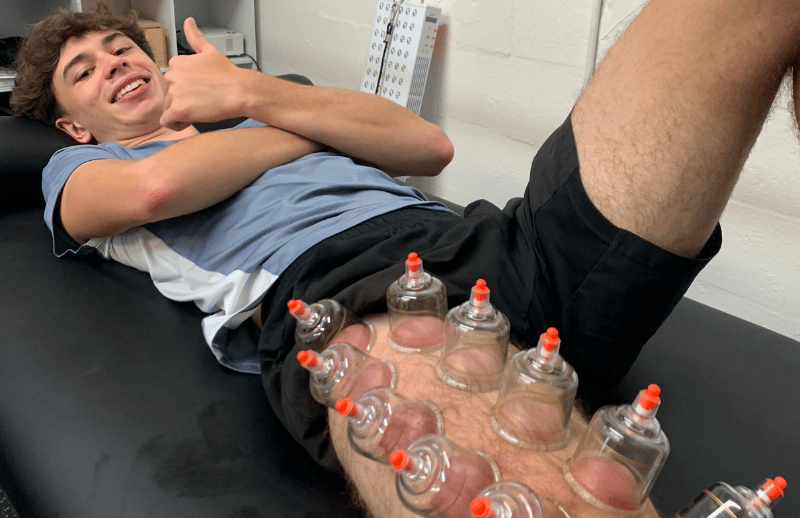
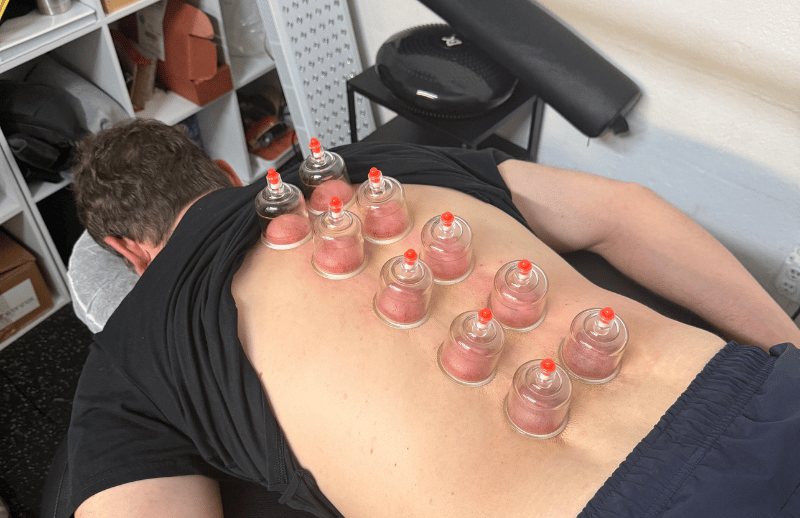
Days for cupping marks to fully resolve. They are a temporary capillary response, not bruising or tissue damage
The Evidence Problem
Why Cupping Gets Dismissed and Why That Dismissal Is Incomplete
Cupping has a reputation problem in sports medicine, and part of it is deserved. Scroll through social media and you will find athletes crediting cupping for everything from faster sprints to injury prevention, none of which the research supports. A 2020 meta-analysis confirmed that while cupping produces large pain reductions versus untreated controls, those effects shrink considerably when compared to sham cupping. That placebo signal is real and should be stated honestly.
But the same research also shows something the dismissals tend to skip. Near-infrared spectroscopy studies confirm that cupping measurably increases oxyhemoglobin concentration in treated tissue. Imaging studies document genuine reductions in deep muscle stiffness at appropriate pressures. A pilot randomized trial found that combining cupping with manual trigger point work produced significantly faster and greater improvements than either approach alone. These are not placebo effects.
The honest version: cupping works best as a short-term adjunct, applied post-exercise to specific regions under adequate pressure, combined with the manual therapy and exercise that drive lasting change. That is the exact model Physical Therapy Doc uses.
Common Misconceptions
What Cupping Is, and What It Is Not
The myth
The marks mean it is working. Darker circles indicate more toxins being released or more healing happening in that area.
The reality
The marks reflect capillary fragility and local tissue restriction. They are caused by negative pressure rupturing small surface capillaries. More restricted or hypersensitive tissue tends to mark more visibly. No toxins are involved.
The myth
Cupping is an ancient remedy that modern science has validated. Elite athletes use it so it must work across the board.
The reality
The evidence is specific, not sweeping. Research supports cupping for neck pain, low back pain, and post-exercise muscle soreness when used correctly. No published trials support it for many of the conditions it gets credited with.
The myth
Any cupping session is the same. A spa treatment and a clinical session produce the same result.
The reality
Pressure, duration, placement, and timing all matter. Research shows the benefit is dose-dependent. 10 minutes at adequate pressure outperforms brief or low-pressure applications. Timing post-exercise produces better fatigue recovery than pre-exercise application.
Post-exercise cupping reduces pain scores by more than 75% compared to no treatment in controlled trials. The same treatment shows a much smaller advantage over sham.
This pattern, large effects vs. no treatment, smaller effects vs. placebo, is consistent across many physical therapy modalities. The answer is not to abandon the tool. It is to use it deliberately, for specific conditions, as part of a complete plan.
How It Works at PTD
An Integrated Approach, Not a Standalone Appointment
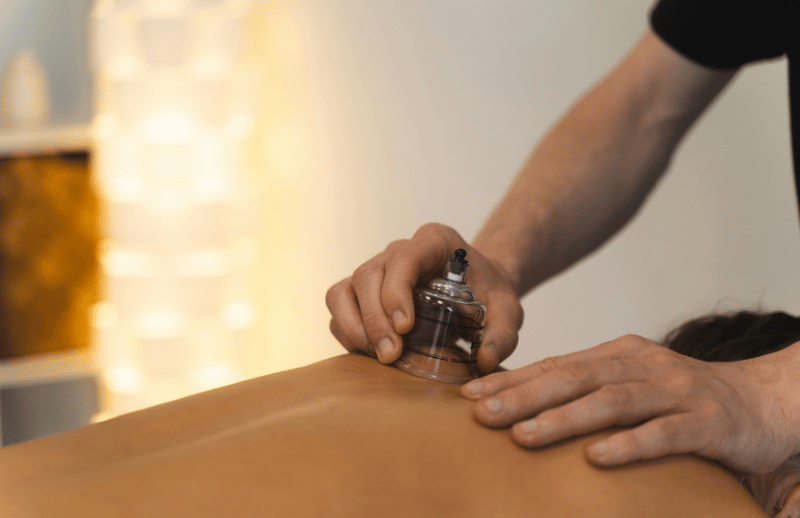
Cupping at Physical Therapy Doc is not a 30-minute session where cups go on, a timer runs, and you leave. Every session is led by Dr. Vlad, a Doctor of Physical Therapy and Certified Strength and Conditioning Specialist, who selects target areas based on your assessment findings, your sport, and what you are trying to accomplish.
"Cupping produces real tissue changes in local blood flow, stiffness, and fascial mobility. Used at the appropriate moment in a session, it accelerates what the rest of the work is already doing. Used instead of the work, it accomplishes very little."
The research supports this framing directly. A pilot randomized trial found that combining cupping with ischemic compression for myofascial trigger points produced significantly faster and greater improvements in pressure pain threshold, neck range of motion, and disability compared to either approach alone. That is the model: cupping as an adjunct that complements the manual therapy and exercise, not a replacement for them.
Sessions at Physical Therapy Doc take place inside Costa Performance gym on Spanish Isles Blvd near US-441, between Clint Moore and Yamato. Every appointment is one-on-one with Dr. Vlad. No aides, no handoffs, no shared treatment time.
What to Expect
How a Cupping Session Is Structured at Physical Therapy Doc
- Movement and tissue assessment first. Before any cups go on, Dr. Vlad evaluates your movement, identifies restriction patterns, and determines which regions are most likely to respond. Cupping is never applied randomly.
- Targeted placement based on your findings. Cups are placed on specific muscles and fascial planes identified in the assessment, not applied by habit or guesswork. For most athletes, the upper back, neck, and lumbar paraspinals are primary targets. Lower extremity work is selected based on your sport and training load.
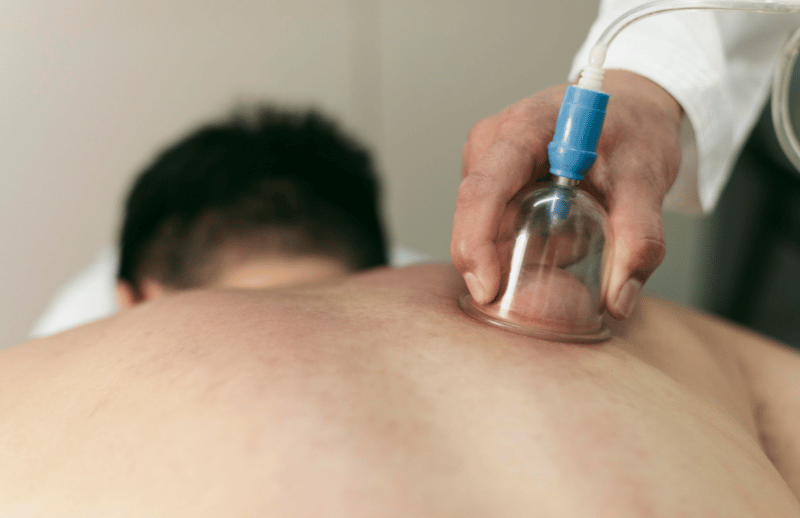
- Pressure and duration that match the research. Studies show meaningful benefit begins at approximately negative 300 mmHg for 10 minutes. Brief low-pressure applications are largely ineffective. Dr. Vlad applies the parameters the research supports.
- Integrated with manual therapy and exercise. Cupping typically runs early in the session. The remaining time includes manual therapy, targeted loading, and mobility work. The tissue changes from cupping make the subsequent work more effective.
- Clear aftercare guidance. You will leave knowing what to expect over the next 24 to 72 hours, how to support recovery, and when to return. The marks are explained, not just tolerated.
Who Benefits Most
Sports and Conditions Where Cupping Has the Strongest Case
The research base is clearest for the neck, upper back, and lumbar spine. Below is where cupping fits into the training and competition demands of the athletes Physical Therapy Doc serves most frequently in West Boca Raton.
Golfers & Tennis Players
Upper back and lumbar paraspinal tension drives loss of rotation and compensatory movement patterns. Cupping addresses the myofascial component that limits how much mobility work can accomplish on its own.
CrossFit & Lifters
High-volume pulling and overhead work creates consistent upper trapezius and thoracic restriction. Research in overhead athletes confirms cupping improves shoulder function and soft tissue compliance with four weeks of consistent treatment.
Runners & Cyclists
Calf, hamstring, and hip flexor tension accumulates over training cycles. A single cupping session on the gastrocnemius improved active dorsiflexion and reduced soreness in controlled trials. Applied consistently, it supports the range of motion maintenance that keeps running mechanics clean.
Pickleball Players
Repetitive shoulder rotation and lateral movement load the posterior shoulder and thoracic region consistently. Cupping helps manage the myofascial tension that builds between matches and sessions.
Active Adults
Neck and low back pain have the strongest cupping evidence of any condition. Eighteen randomized trials in a neck pain meta-analysis confirmed significant pain reduction and improved function. For the active adult managing chronic tension, cupping is a legitimate adjunct to the exercise and manual therapy that drives long-term change.
Chronic Muscle Tension
If you have tissue that stays restricted no matter how much you stretch or foam roll, the problem may be fascial compliance rather than muscle length. Cupping addresses that layer directly in a way passive stretching does not.
Why Physical Therapy Doc
What Makes Cupping Here Different from a Spa or a Group Clinic
Cupping is available at massage studios, spas, and many PT clinics in Boca Raton. The difference at Physical Therapy Doc is not the cups. It is the clinical context they sit inside.
Assessment-Driven
Every cupping session begins with a movement assessment. Cups go where the findings point, not where they have always gone.
DPT-Administered
Dr. Vlad is a Doctor of Physical Therapy and Certified Strength and Conditioning Specialist. Every session is his work, his eyes, his hands.
Evidence-Calibrated
The pressure, duration, and timing used at Physical Therapy Doc reflect the parameters the research supports, not tradition or habit.
Integrated with Exercise
Cupping is never the whole session. It prepares tissue for the manual therapy and loading work that produces lasting results.
Performance-Focused
Located inside Costa Performance gym, every session is built around keeping you training, competing, and moving at a high level.
One-on-One Only
No shared treatment time. No aides. Direct-pay, out-of-network model that keeps every visit focused entirely on you.
Serving West Boca Raton and Surrounding Communities
Physical Therapy Doc is located at 10018 Spanish Isles Blvd, Suite A52, inside Costa Performance gym. Easy to reach from the communities and clubs below.
Cupping is not magic. But applied with adequate pressure, to tissue that actually needs it, as part of a complete session, it does something passive stretching cannot.
At Physical Therapy Doc, it is one piece of a system built to keep you training and performing without limitation.
Common Questions
FAQ About Cupping Therapy in Boca Raton
Cupping produces real, measurable changes in soft tissue. Research shows it increases local blood flow and oxygenation, reduces muscle stiffness, and significantly lowers pain perception versus untreated controls. One randomized controlled trial found DOMS pain scores dropped from 6.1 to 1.6 after a single cupping session. That said, effects are strongest in the short term and work best as part of a complete treatment plan that includes exercise and manual therapy, not as a standalone cure.
The marks are caused by negative pressure drawing blood to the surface, which temporarily ruptures small capillaries in the skin. This is different from a bruise caused by impact. The marks are an expected physiological response, not a sign of damage, and they fade within 7 to 10 days in most patients. Darker marks typically indicate more restricted tissue in that area. At Physical Therapy Doc, we use dry cupping only, which keeps the marks mild and the risk profile minimal.
Dry cupping, performed correctly by a trained clinician, has a very low risk profile. The research consistently shows adverse events are mild and self-limiting, primarily the expected skin marks and occasional temporary soreness. The serious complications reported in the literature are almost exclusively linked to wet cupping, fire cupping, or improper technique. At Physical Therapy Doc, every cupping session is performed by Dr. Vlad, a Doctor of Physical Therapy, using only dry cupping on appropriate anatomical locations with a full intake assessment beforehand.
This depends on what you are treating and how your body responds. For acute muscle soreness and tension, one to two sessions per week alongside your regular training may be appropriate. For chronic neck or low back pain, research suggests consistent treatment over four to eight weeks produces the most meaningful results. Dr. Vlad will assess your response after the first session and adjust frequency from there. Cupping at Physical Therapy Doc is always part of a broader treatment plan, not a standalone appointment.
This is a fair question. When cupping is compared to sham cupping in rigorous trials, the effect versus placebo is smaller than the effect versus no treatment. There is almost certainly a contextual component to the pain relief. However, imaging studies also confirm real tissue changes: measurable increases in oxyhemoglobin, reduced muscle stiffness in deep layers, and improved soft tissue compliance after consistent treatment. The most accurate answer is that cupping has a real mechanical effect and a contextual effect, similar to many other physical therapy modalities.
Yes. Physical Therapy Doc is located at 10018 Spanish Isles Blvd, Suite A52, inside Costa Performance gym in West Boca Raton. We serve active adults and athletes from Boca Raton, Delray Beach, Boynton Beach, and surrounding communities including Boca Bridges, Seven Bridges, St. Andrews Country Club, and Broken Sound Club. You can schedule a free consultation by submitting your email on this page.
Schedule Your Free Consultation
Find out whether cupping fits what you are dealing with. The first conversation is free, and it starts with understanding your training, your body, and your goals.
Please enter a valid email address.
No spam. No insurance forms. A real conversation about what is going on and how to fix it.
