
Do you ever feel like modern rehab sounds more like a tech showroom than healthcare?
Shockwave. Laser. Red light. Ultrasound. E-stim. Dry needling.
It’s frustrating — especially when you’re dealing with pain, stiffness, or an injury that just won’t settle down — and every provider seems to recommend a different machine as the solution.
Even worse?
You may have already tried one (or several) of these treatments…
And you’re still not where you want to be.
That confusion leads to wasted time, wasted money, and a growing fear that nothing is actually fixing the root problem. It can keep you sidelined from training, sports, or even just feeling strong and capable day-to-day.
But here’s the good news:
These tools can be helpful — when used for the right reason, at the right time, for the right person.
In this blog, we’ll break down the most common rehab modalities, explain what they actually do, what they don’t do, and how to think about them intelligently if your goal is long-term recovery and performance — not just short-term relief.
Shockwave Therapy
Best for: Stubborn tendon and soft-tissue pain
What it is:
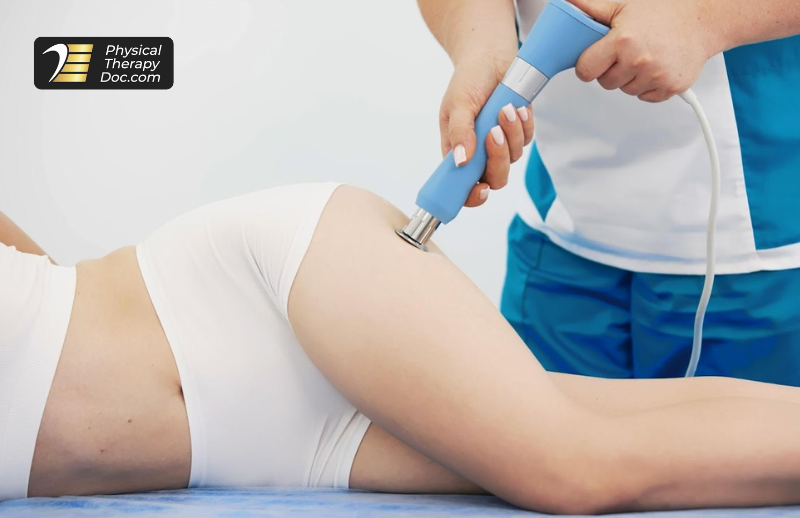
Shockwave therapy uses high-energy acoustic waves to stimulate tissue healing.
What it actually does well:
- Stimulates blood flow and cellular activity
- Helps desensitize chronically painful tissue
- Can jump-start healing in tendons that feel “stuck”
Common uses:
- Achilles tendinopathy
- Plantar fasciitis
- Patellar tendon pain
- Chronic elbow or shoulder tendinopathy
What it doesn’t do:
Shockwave does not fix poor load tolerance, weak tissue, or faulty movement patterns on its own.
Bottom line:
Shockwave can help change the tissue environment — but progressive loading and strength work are what lock in the result.
TECAR Therapy
Best for: Improving tissue mobility and circulation
What it is:
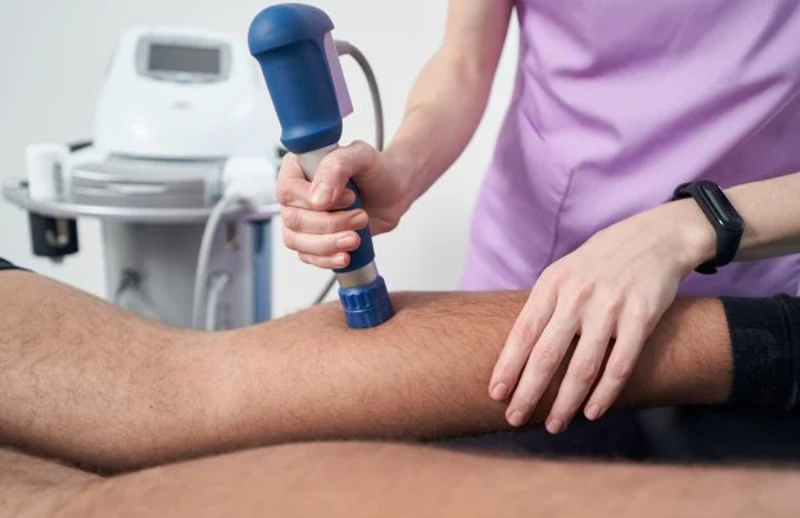
TECAR uses radiofrequency energy to gently heat tissue from the inside out.
What it actually does well:
- Improves circulation
- Reduces stiffness
- Helps tissue relax and move better before training or rehab
Common uses:
- Muscle tightness
- Joint stiffness
- Early rehab phases where movement feels guarded
What it doesn’t do:
TECAR doesn’t rebuild strength or resilience.
Bottom line:
Think of TECAR as a preparatory tool — useful for opening the door to movement, not replacing it.
Therapeutic Ultrasound
Best for: Short-term symptom modulation (limited role)
What it is:
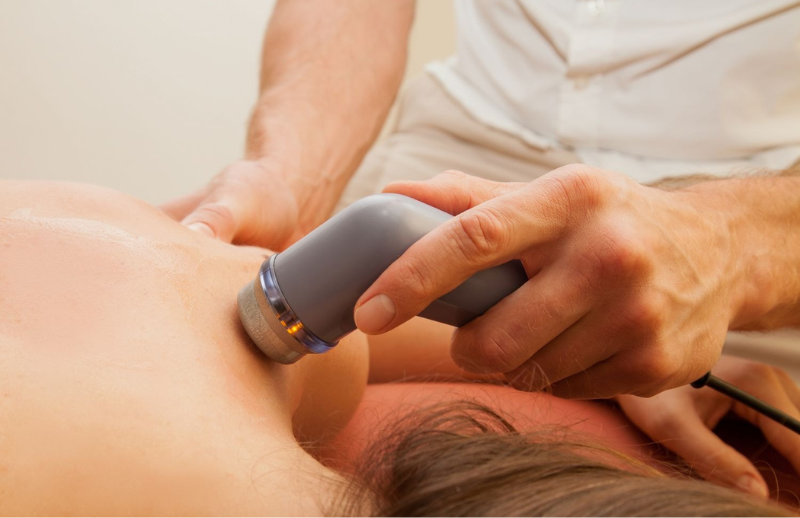
Sound waves applied to tissue to create gentle heating or vibration effects.
What it actually does well:
- May temporarily reduce pain
- Can increase tissue extensibility briefly
Reality check:
Research shows ultrasound has limited long-term benefit when used alone.
Bottom line:
Ultrasound isn’t harmful — but it shouldn’t be the centerpiece of a serious rehab plan.
Laser Therapy (Low-Level or Class IV)
Best for: Calming irritated tissue and inflammation
What it is:
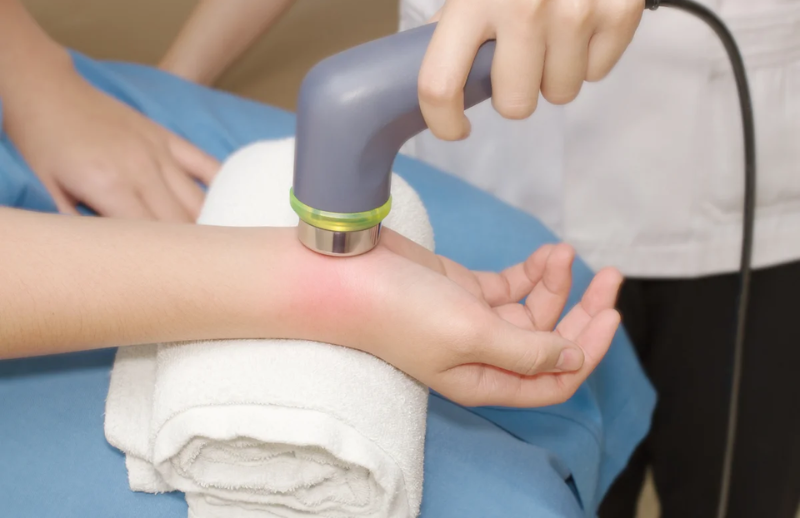
Laser therapy uses light energy to influence cellular activity and inflammation.
What it actually does well:
- May reduce inflammation
- Can help with pain sensitivity
- Supports tissue recovery
Common uses:
- Joint irritation
- Post-injury soreness
- Early inflammatory stages
What it doesn’t do:
Laser won’t restore lost strength, coordination, or tissue capacity.
Bottom line:
Helpful support, not a stand-alone solution.
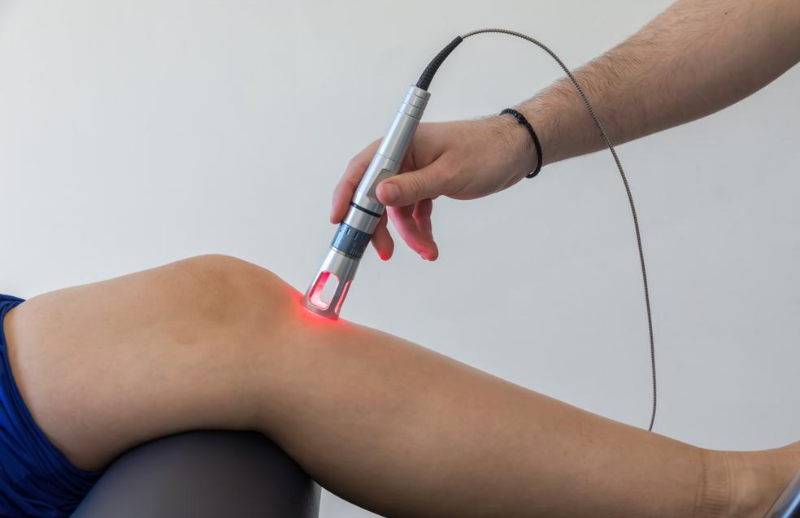
Red Light & Infrared Therapy
Best for: Recovery, circulation, and general tissue health
What they are:
Both use light-based energy; infrared penetrates deeper than red light.
What they actually do well:
- Promote circulation
- Support recovery between sessions
- May reduce soreness and stiffness
Where they shine:
- Wellness routines
- Recovery days
- Complementing training and rehab
Bottom line:
Excellent adjuncts — not substitutes for intelligent loading and movement.
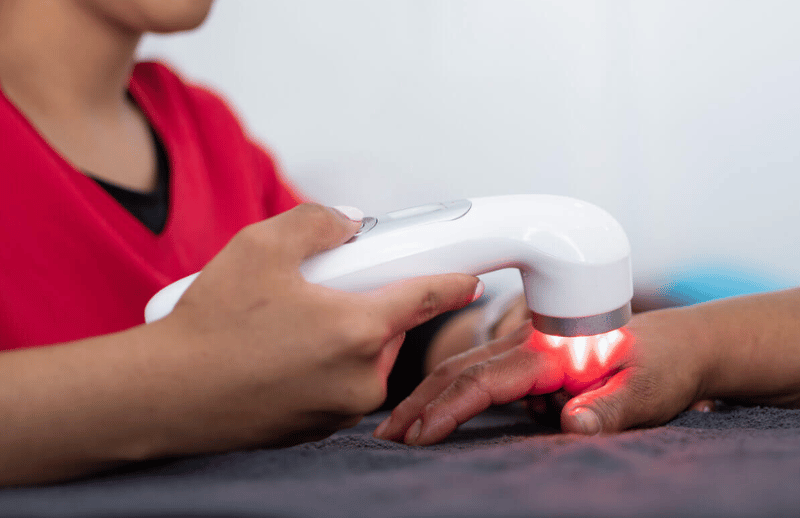
Electrical Stimulation (E-Stim / NMES)
Best for: Muscle activation and early rehab phases
What it is:
Electrical current used to stimulate muscle contraction or sensory input.
What it actually does well:
- Helps “wake up” inhibited muscles
- Useful after surgery or acute injury
- Can assist with pain modulation
Limitations:
E-stim does not replace voluntary strength training.
Bottom line:
A bridge tool — helpful early, phased out as movement capacity improves.
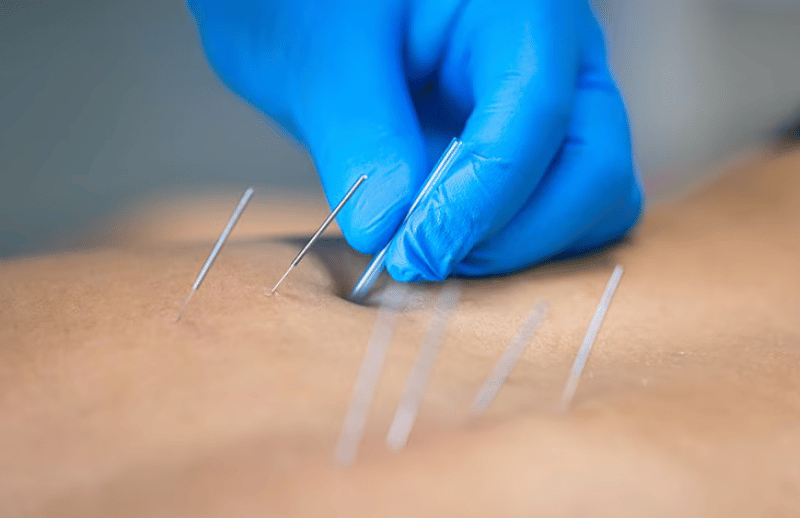
Dry Needling
Best for: Reducing muscle tone and pain sensitivity
What it is:
A thin needle inserted into muscle tissue to influence tone and nervous system response.
What it actually does well:
- Reduces muscle guarding
- Improves short-term mobility
- Helps calm protective pain responses
What it doesn’t do:
Dry needling doesn’t build durability or resilience.
Bottom line:
It can lower the noise — but rehab progress comes from what follows next.
The Big Mistake: Chasing Modalities Instead of Progress
Here’s the truth most people aren’t told:
No modality — no matter how advanced — replaces progressive movement, strength, and load tolerance.
Modalities are tools.
Not solutions.
At Physical Therapy Doc, we use these technologies strategically, not automatically — and always as part of a bigger plan focused on:
- Restoring capacity
- Building resilience
- Returning you to training, sport, and life with confidence
What Actually Gets Results
If you’re dealing with pain or an injury and wondering which modality you need, the better question is:
“What does my body need to tolerate again — and what’s holding it back?”
That’s where real progress happens.
If you’re tired of guessing, hopping from treatment to treatment, or relying on short-term fixes, we can help.
👉 Book a free phone consult with Physical Therapy Doc
We’ll help you understand:
- What’s driving your issue
- Which tools (if any) actually make sense
- And how to build a clear path back to strength and performance
🔗 Visit https://physicaltherapydoc.com/contact/ to get started.
Not Ready Yet? Start Here
If you want to keep learning, check out these free resources:
- Our other educational blogs on injury recovery and performance
- Follow us on Instagram for behind-the-scenes rehab and training insights
- Save this article so you can reference it the next time someone tries to sell you a machine as the “answer”

