
Dry Needling for Lower Back Pain in Boca Raton
Your back is tight. Again.
Maybe it locks up the second you roll out of bed. Maybe it stops you mid-rep, or forces you to bail on a run you had planned all week. You stretch, you foam roll, you rest — and it comes back anyway.
That cycle is exhausting. And if you’re the type of person who lives to train, compete, or just stay active — sitting on the sidelines while your back “heals” feels like a punishment you didn’t earn.
Here’s the thing: rest alone often isn’t enough, especially when back pain keeps coming back or has been there for a while. Active treatment tends to work a lot better than just waiting it out. And often, ongoing pain is linked to deep muscle sensitivity and tension, including tight knots called trigger points, that can respond better to targeted treatments like dry needling than to stretching alone.
That’s where dry needling comes in.
What Is Dry Needling?
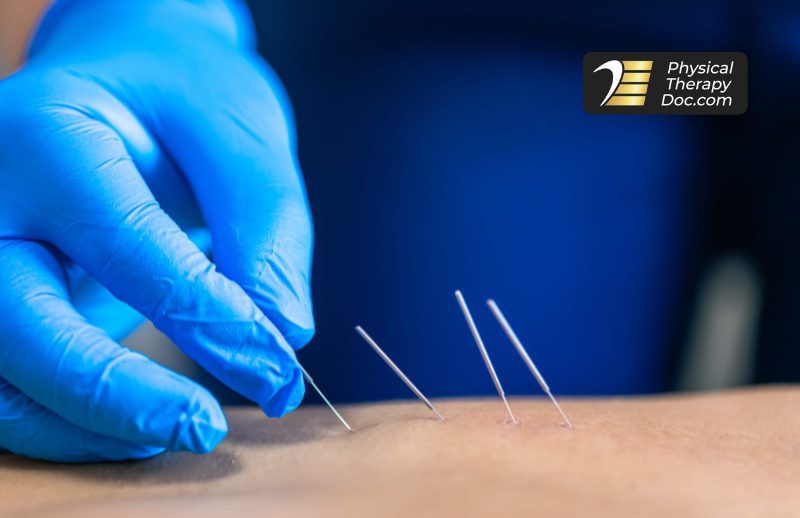
Dry needling is a treatment where a thin, solid needle is inserted directly into a tight, painful muscle. There’s no medication involved — just the needle itself. That’s why it’s called “dry.”
Think of a trigger point like a button that got jammed in the “on” position. The muscle is supposed to contract and then let go — but it’s stuck on. It never fully releases. Dry needling is what reaches in and un-sticks that button, so the muscle can finally relax the way it’s supposed to.
When the needle hits a tight spot (called a trigger point), it often produces a brief muscle twitch. Research suggests this can help reduce local tension and sensitivity in that area — and may help “reset” how that spot and your nervous system are processing pain. Think of it like rebooting a frozen program: the system was stuck, and now it can run the way it’s supposed to.
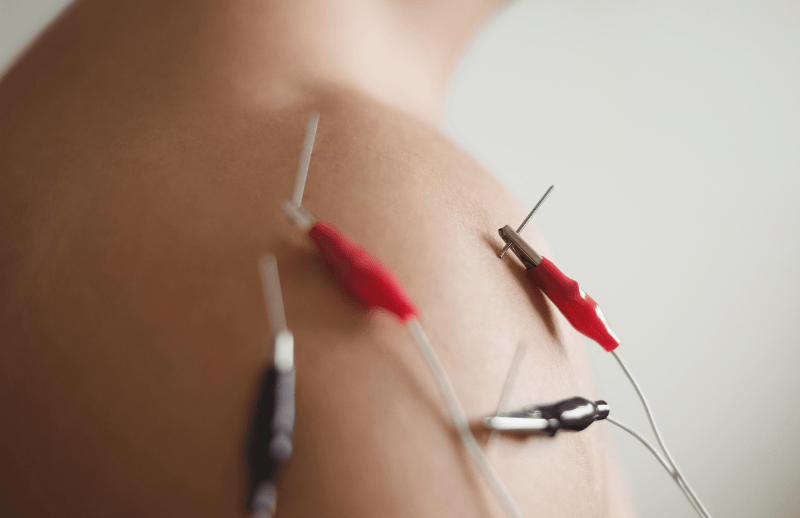
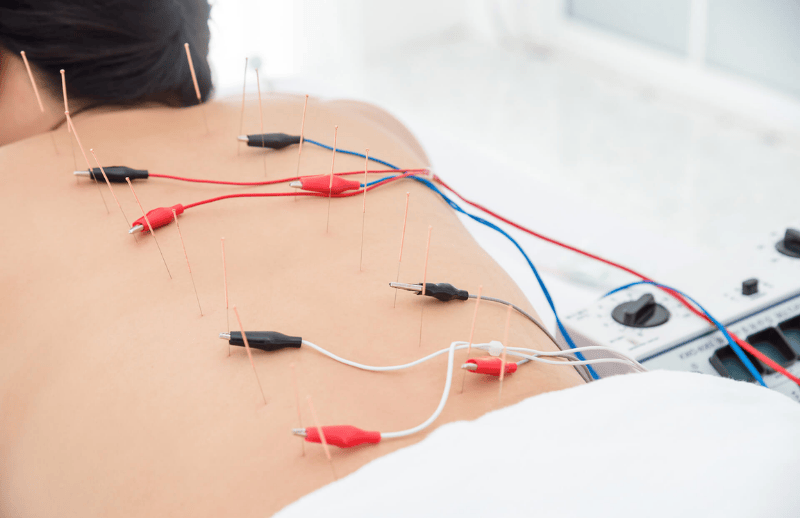
In some cases, we pair dry needling with gentle electrical stimulation — a small current that runs through the needle. Clinical studies suggest this combination may further improve pain, function, and even sleep quality for some people with chronic low back pain, though research is still evolving on the best way to use it. If that’s the right call for you, we’ll walk you through it before we start.
🔗 Want the full picture? Learn more on our main Dry Needling page →
How Dry Needling Helps Lower Back Pain
Lower back pain can come from a lot of different places — muscle strains, overuse, poor movement patterns, sitting too long, or just pushing hard in your sport. Whatever the source, dry needling targets the muscles driving your pain. Here’s how it helps:
Releases Tight, Locked-Up Muscles
The muscles along your lower back — especially the ones on either side of your spine — can get stuck in a constant state of tension. This tightness doesn’t always show up on an MRI. But you feel it every time you try to bend down, lift something, or get out of bed.
Many patients notice a meaningful drop in that deep, achy tension within the first few sessions — especially when dry needling is paired with the right exercise program. That said, how quickly you respond and how much improvement you see will vary. We’ll give you a realistic picture after your evaluation.
Reduces Pain Signals
When a muscle has a trigger point, it’s thought to keep your nervous system on high alert — sending pain signals even when you’re just sitting still. Dry needling is believed to help dial down that sensitivity. It’s like turning down a smoke alarm that’s been beeping all day even though there’s no fire — your system gets a chance to calm down.
For people dealing with chronic low back pain — the kind that’s been there for months — this can be a real turning point. When your nervous system is less on edge, you feel less pain, you guard less, and you start moving more freely again.
Improves Blood Flow to the Area
Tight, knotted muscles tend to have reduced circulation — like a kinked garden hose that water can barely get through. When dry needling releases a trigger point, local blood flow to that area appears to increase and muscle stiffness can decrease. Those changes may support your body’s natural recovery process and help tissue start working normally again.
Helps You Move More Freely
Pain changes how you move. When your back hurts, your body compensates — you shift your weight, alter your stride, brace through movements that should feel natural. Over time, those compensations create new problems.
Dry needling can help break that pattern. When muscle tension decreases, your joints often move more freely, and we can build on that with exercise.
Conditions Dry Needling Can Help With
Dry needling for low back pain treatment in Boca Raton can be helpful across a wide range of situations. You don’t need a dramatic injury to benefit. Research suggests dry needling can help people with both recent and longer-standing low back pain — especially when it’s part of a broader plan.
- Chronic low back pain (pain that’s been there longer than 3 months)
- Acute muscle strains from lifting, sports, or sudden movements
- General muscle tightness and stiffness in the lower back and hips
- Post-workout soreness that lingers longer than it should
- Pain from sitting at a desk all day
- Hip flexor tightness that pulls on the lower back
- Referred pain that radiates into the glutes or down the leg
- Recurrent back pain that keeps coming back after rest
Not sure if your specific situation is a good fit? That’s exactly what our free phone consultation is for. We’ll ask the right questions and give you a straight answer — no obligation.
What Does Dry Needling Actually Feel Like?
Fair question — and we’d rather be honest with you than oversell it.
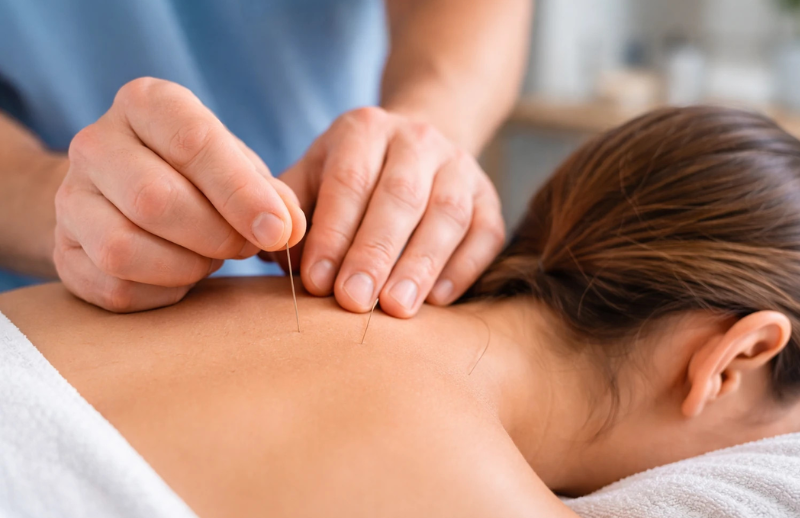
The needle itself is extremely thin — much thinner than a typical injection needle. Most people don’t feel it break the skin at all.
When the needle reaches a trigger point, you may feel a brief muscle twitch — sometimes described as a quick cramp or a deep ache that lasts only a second or two. That response is actually what we’re looking for. It means we found the right spot.
After the session, it’s common to feel a little sore — usually a dull ache similar to how you feel after a tough workout. That soreness typically fades within 24 to 48 hours, and most people feel noticeably better once it does. Some people do feel brief sharp discomfort during certain spots — that’s normal, and it usually passes within seconds. Serious complications are very rare when the treatment is done by a trained clinician.
We walk you through every step before we start. You’re always in control — and your comfort matters to us. If something doesn’t feel right, you say the word and we adjust.
Why Athletes and Active Adults Choose Physical Therapy Doc
There’s no shortage of places in Boca Raton where you can get dry needling. But there’s a big difference between checking a box and actually getting results.
At Physical Therapy Doc, dry needling is never the whole plan — it’s one tool inside a bigger, individualized strategy built around you: your sport, your goals, and what’s actually keeping you from performing at your best. Research shows dry needling can reduce pain and improve function in people with low back pain, especially in the short term, and tends to work best as part of a full rehab plan that includes exercise and movement retraining.
Here’s what makes us different:
- One-on-one care, every session — You work directly with your therapist. No aides, no handoffs, no being bounced around.
- Athletic mindset — We speak your language. We understand training loads, competition schedules, and the frustration of being told to “just rest.” Our goal is to keep you moving — not sideline you.
- Precision treatment — We use full-body assessment to find the root cause of your back pain, not just treat where it hurts. That’s how we get results that last.
- Clear roadmap from day one — After your evaluation, you’ll know exactly what’s wrong, why it’s happening, and what the plan looks like from week to week. No guessing.
- We don’t stop at symptom relief — Traditional PT stops when the pain goes away. We go further — building you back stronger, more durable, and more resilient than you were before.
We work with runners, CrossFit athletes, tennis and pickleball players, golfers, weekend warriors, and everyone in between. If you’re serious about staying active — at any age — you belong here. See everything we treat with dry needling →
Frequently Asked Questions
How many dry needling sessions will I need for lower back pain?
It depends on how long you’ve had the pain and what’s driving it. For acute muscle tightness or a recent strain, many patients notice a meaningful difference within two to four sessions. Chronic lower back pain — the kind that’s been building for months or years — usually takes longer to fully resolve. We’ll give you a realistic estimate after your evaluation, not a vague “we’ll see.”
Is dry needling the same as acupuncture?
They use similar-looking needles, but they’re completely different in purpose. Acupuncture is rooted in traditional Chinese medicine and focuses on energy pathways. Dry needling is based on Western anatomy and muscle science. We’re targeting specific trigger points — tight, painful muscle knots — to release tension and restore normal tissue function. The approach, the training, and the intended outcomes are different.
Can I work out after a dry needling session?
Usually, yes — but we recommend keeping it light on the day of treatment. Your muscles just went through a targeted release process, and they need a little time to respond. Most patients are back to full training within 24 to 48 hours. We’ll give you specific guidance based on your session and your training schedule.
Will dry needling fix my lower back pain for good?
Dry needling is a powerful tool, but it works best as part of a full plan — not a standalone fix. If the movement patterns or strength deficits that caused the problem in the first place don’t change, the pain tends to come back. That’s why we pair dry needling with targeted exercise, mobility work, and a plan to address the root cause. Our goal isn’t just to get you out of pain — it’s to keep you out of pain.
Is dry needling covered by insurance?
Physical Therapy Doc is a self-pay, out-of-network practice. We don’t accept insurance — and that’s intentional. Insurance-based PT often comes with strict session limits, less time per visit, and less control over your care. By working directly with you, we can give you more focused time, a fully individualized plan, and the attention your recovery actually deserves. Many clients find this model saves them time and frustration — and gets them better results.
Do I need a referral to see you?
No referral needed. Florida is a direct-access state, which means you can come straight to us without seeing a doctor first. You can schedule a free phone consultation today and we’ll take it from there.
Is dry needling safe?
Yes — when performed by a trained, licensed physical therapist, dry needling is generally very safe. The most common side effects are temporary soreness, small bruises, or a brief uptick in pain for a day or two. More serious complications — like infection or injury to deeper structures — are very rare and can be further minimized with proper screening and sterile technique, which we follow for every session. We’ll also screen you beforehand — there are a few situations where dry needling isn’t the right call, and we’ll tell you honestly if that’s the case.
Ready to Stop Managing Your Back Pain and Start Fixing It?
If you’ve been dealing with lower back pain that just won’t go away, dry needling might be worth exploring.
But the only way to know for sure is to get a real assessment from someone who looks at the full picture.
Start with a free phone consultation. We’ll ask about your history, your goals, and what’s been getting in the way.
If we think dry needling, or any part of our care, is a fit for you, we’ll tell you exactly why and what the next step looks like.
We Are Located Inside of the Costa Performance Gym

OFFICE HOURS
Monday
9:00 am – 6:00 pm
Tuesday
9:00 am – 6:00 pm
Wednesday
9:00 am – 6:00 pm
Thursday
9:00 am – 6:00 pm
Friday
9:00 am – 6:00 pm
Saturday
Closed
Sunday
Closed
(561) 567-9040

Primary Location:
10018 Spanish Isles Blvd Suite A52,
Boca Raton, FL 33498